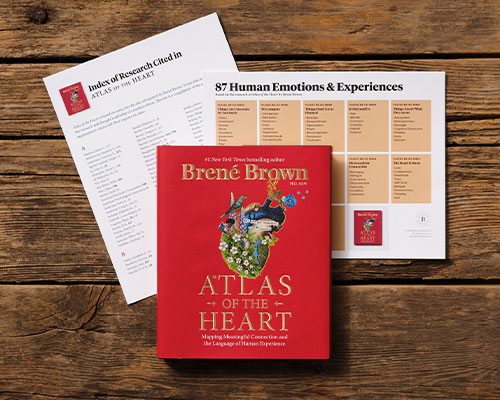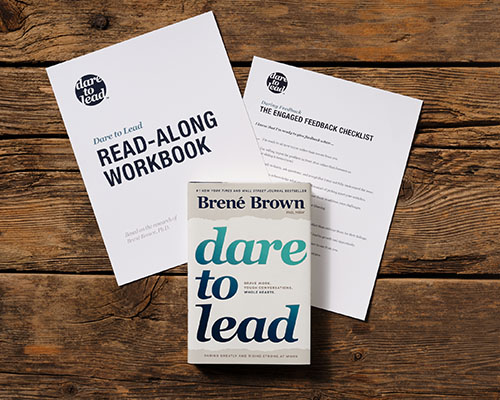
Now available for pre-order!
About Brené
Dr. Brené Brown is a professor and vulnerability researcher at the University of Houston Graduate College of Social Work. Because vulnerability is at the center of many thoughts, feelings, and behaviors, her research topics cover a broad range of emotions and experiences, including shame, courage, and authenticity. Brené writes,
"In our culture, vulnerability has become synonymous with weakness. We associate vulnerability with emotions like fear, shame, and scarcity; emotions that we don’t want to discuss, even when they profoundly affect every aspect of our lives.
To reduce our feelings of vulnerability, we wake up every morning, put on our game face, and rarely take it off - even at home. We use invulnerability as a shield to protect us from uncomfortable emotions and struggles with anxiety and self-doubt. But invulnerability has a price.
Vulnerability is indeed at the core of difficult emotions, but it is also the birthplace of authenticity, courage, joy, love, belonging, accoutabililty, innovation, inspiration, creativity, and spirituality. When we avoid or shut down vulnerability, we lose access to the experiences that give purpose and meaning to our lives.
If we want to change the way we live, love, parent, teach, lead organizations, and build communities, we have to start with a conversation about vulnerability - this is where our story begins."
Brené spent the first five years of her decade-long study focusing on shame and fear, and is now using that work to explore a concept that she calls Wholeheartedness. She poses the questions:
How do we learn to embrace our vulnerabilities and imperfections so that we can engage in our lives from a place of authenticity and worthiness? How do we cultivate the courage, compassion, and connection that we need to recognize that we are enough – that we are worthy of love, belonging, and joy?
Brené has won numerous teaching awards, including the College’s Outstanding Faculty Award. In 2008, she was named Behavioral Health Scholar-in-Residence at the Council on Alcohol and Drugs Houston. Brené’s work has been featured on PBS, NPR, and the Oprah and Friends Radio Network, and her articles have appeared in Self magazine, Elle magazine, and many national newspapers. She is also a frequent guest on radio shows across the US and she has given two TEDx talks on her vulnerability research. Most recently, Houston Women Magazine named her one of "The 50 Most Influential Women of 2009."
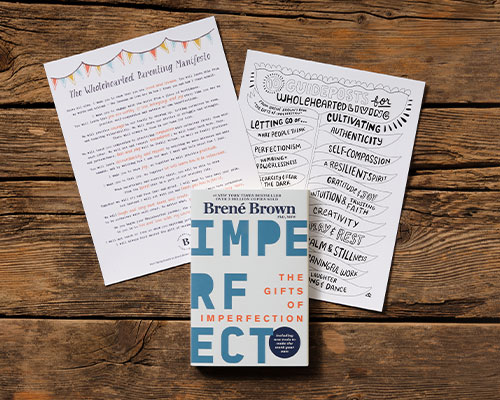
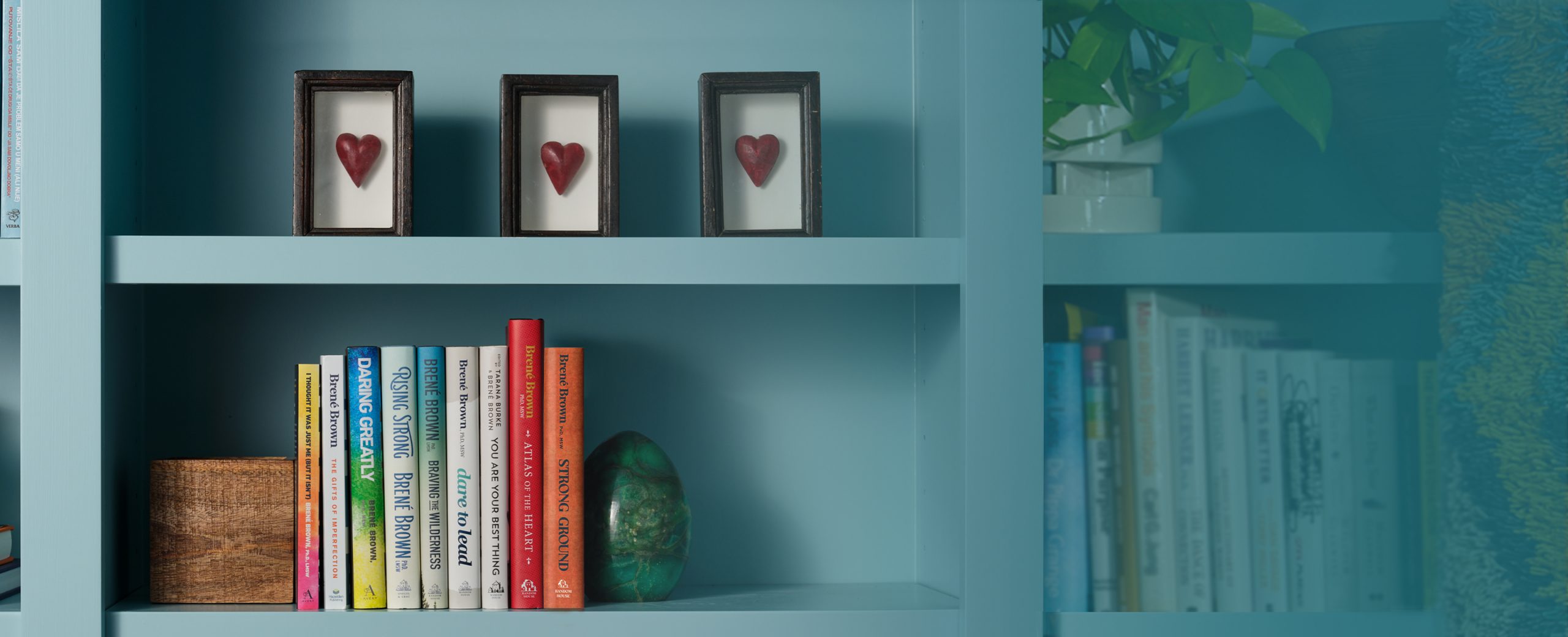
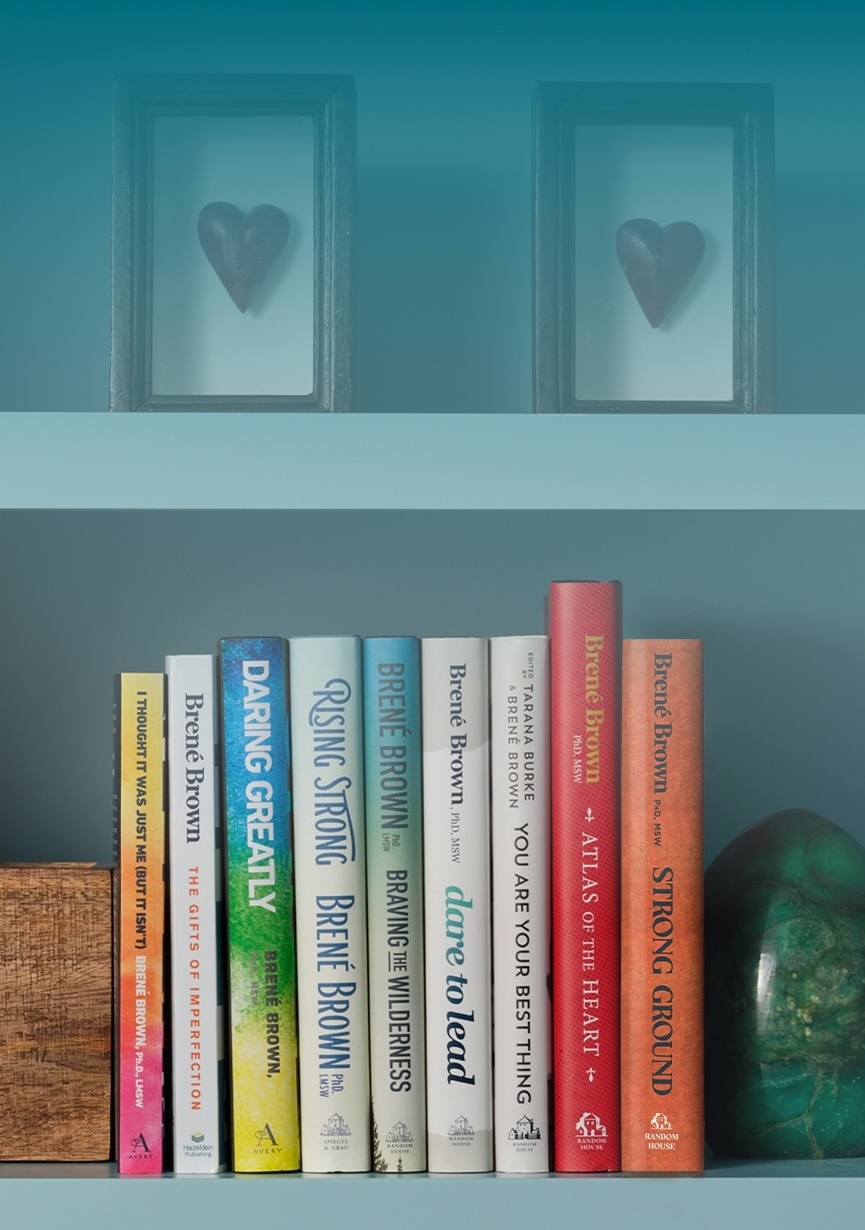
Brené is the author of I Thought It Was Just Me (but it isn’t): Telling the Truth About Perfectionism, Inadequacy, and Power (Gotham, 2007) and two forthcoming books, The Gifts of Imperfection: Letting Go of Who We Think We Should Be and Embracing Who We Are (Hazelden, 2010) and Wholehearted: Spiritual Adventures in Falling Apart, Growing Up, and Finding Joy (Hazelden, 2011). She is also the author of Connections, a psychoeducational shame resilience curriculum that is being facilitated across the nation by mental health and addiction professionals.
Brené’s current research focuses on authentic leadership and wholeheartedness in families, schools, and organizations.
Brené lives in Houston with her husband, Steve, and their two young children, Ellen and Charlie.
For a copy of Dr. Brown's CV or a publicity photo, click here.

A Note from Brené
When I stand back and look at the work I’ve done over the past ten years, I can clearly see that the heart of my work is about the very human need to live with authenticity, love and belonging, and a resilient spirit. I call this WholeHearted living. I have dedicated my career to studying difficult topics like shame, empathy, and vulnerability because I want to know, in my head and in my heart, why we’re all so afraid to let our true selves be seen and known. I want to hear and tell the stories that inspire us to be real, imperfect, and powerful. The core of WholeHearted living is connection.
My passionate and hopeful search to understand WholeHearted living has taken many forms, including a book on my decade-long study on shame, my work on addiction and behavioral health, my parenting research, the personal writing I do on my blog, my shame-resilience curriculum, my teaching at the University of Houston Graduate College of Social Work, the work I do with corporations around topics like authentic leadership and organizational change; and certainly my own spiritual journey.
Last year, an event organizer called me and said, “I’m trying to put your bio statement together for the publicity material and I’m having a really hard time.” She explained, “When I went to your lecture, I was really moved by your stories so I thought I’d describe you as a storyteller. I’m just worried that people may not believe what you’re saying if I describe you that way.” The open-minded part of me was trying to listen and the scared, academic part of me was thinking, “Storyteller? Are you kidding me? What’s next? Magic pixie?”
She continued, “I also thought about describing you as a researcher, but that won’t work either. They’ll believe you, but they’ll also assume that you’re going to be boring and irrelevant.”
I drew a deep breath and exhaled. “Trust me. I understand. It’s the story of my life. Literally.” I thought for a minute then called on my courage and said, “Why don’t you just put researcher and storyteller.” There was dead silence on the other end of the phone. After a few seconds, she forced a diminishing laugh and said, “That’s ridiculous. There’s no such thing as a researcher storyteller.”
I am a researcher and a storyteller. I am an academic and a lover of the intuitive. I am afraid to write and I am a writer. I am an activist and a sucker for good face products. I am a teacher and I am a student. I am seriously focused and I am whimsically creative. My safe place is with my husband and children and the space I most often crave is alone time. I am full of fear and I am full of courage. I trust my head, I'm learning to trust my heart, and I try to live in the soulful place that connects the two.
I know the world looks good when everything is stuffed into neat little boxes, covered in shiny wrapping paper, and tied with big, crisp bows (I like the Pottery Barn holiday spreads as much as the next person). The problem is that, despite our desire to stuff ourselves and the people around us in those convenient compartments, I've never met anyone who really fits in one neat box. We're all more complex than that. Plus, the gifts – joy, gratitude, hope, love, resilience, grace – are inside those boxes. We’ve got to rip off all of that stuff to get inside. Unwrapping, ripping, and untying lots of seemingly mismatched boxes is a big mess. A big, wild, authentic, wonderful mess.
I recently wrote a piece on my blog about my journey to live authentically and soulfully. I received several emails asking me what I meant by living authentically and soulfully. For me, the soulful piece is about living in the spirited space that connects my head and my heart (which is a huge challenge for a head person, like me). Trying to come up with a definition for authenticity forced me to tap deep into my research to find the words that capture what I've learned in my work and reflects what I've actually lived. Here's what I come up with:

Thanks for visiting! If you'd like to schedule an event, please click here.